AI Product
DecisionFlow — Decision Intelligence AI
DecisionFlow is an AI-powered decision intelligence platform that transforms meeting transcripts into structured insights, actionable recommendations, and clear option comparisons—helping teams make faster, more informed decisions. Built with Next.js, React, FastAPI, PostgreSQL, and OpenRouter.
- Role
- AI Product Manager
- Project type
- AI Product
- Status
- MVP
- Organization
- Personal project
- Timeline
- 2026-07-06 — 2026-07-10
- Team
- Independent Project
- Confidentiality
- Public
- Published
- published
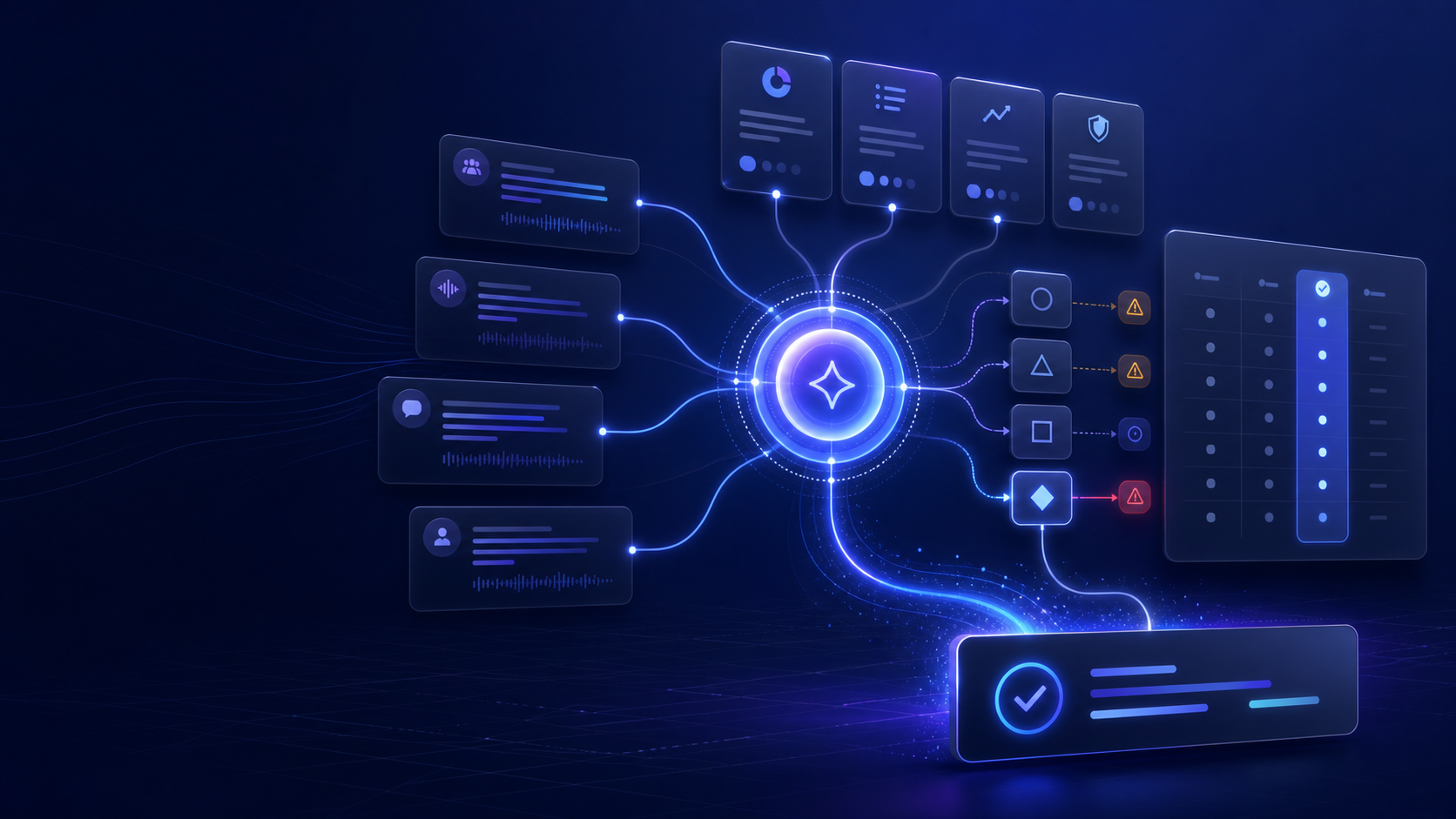
Product walkthrough
Selected screens
Confidentiality note
This project is a self-initiated portfolio case study created for demonstration purposes. All names, meeting transcripts, business scenarios, and data shown are fictional or anonymized. No confidential client information, proprietary company data, or sensitive personal information is included.
Project overview
DecisionFlow — Project Overview
DecisionFlow is a full-stack, AI-powered decision intelligence platform designed to help teams turn unstructured discussions into clear, informed, and actionable decisions.
Users can paste or upload meeting transcripts, which the platform analyzes to identify key objectives, stakeholders, constraints, risks, assumptions, and possible courses of action. The extracted information can be reviewed and refined before DecisionFlow generates evidence-based recommendations and side-by-side option comparisons.
The platform supports the complete decision-making workflow—from transcript collection and AI-assisted extraction to structured review, recommendation generation, comparison, finalization, and storage in a reusable decision library.
The frontend is built with Next.js, React, TypeScript, and Tailwind CSS, while the backend uses FastAPI, Python, PostgreSQL, SQLAlchemy, and Pydantic. AI processing is integrated through OpenRouter, with validated structured responses, secure JWT authentication, database persistence, and automated backend testing.
Key features include:
- Meeting transcript paste and file upload
- AI-powered extraction of decision context
- Review and refinement of extracted insights
- Structured comparison of available options
- AI-generated recommendations with supporting rationale
- Decision finalization and searchable history
- Secure user authentication and protected API access
- Persistent PostgreSQL data storage
- Responsive, workflow-focused user interface
DecisionFlow demonstrates full-stack application development, AI service integration, structured data validation, API design, database architecture, authentication, and user-centered product design.
Business problem
Organizations make important decisions through meetings, but the reasoning, risks, constraints, and action items discussed often remain buried in lengthy transcripts or scattered notes. Manual analysis is time-consuming, inconsistent, and vulnerable to missed information. This leads to slow decision-making, unclear accountability, poor team alignment, repeated discussions, and difficulty understanding why a decision was made. DecisionFlow addresses this problem by transforming unstructured meeting content into structured insights, comparable options, and evidence-based recommendations—helping teams make faster, clearer, and more traceable decisions.
Product objective
DecisionFlow aims to simplify and improve organizational decision-making by transforming unstructured meeting transcripts into structured insights, comparable options, and actionable recommendations. The product helps teams reduce manual analysis, identify important risks and constraints, align stakeholders, and make faster, more informed decisions while preserving a clear record of how and why each decision was made.
Product approach
DecisionFlow follows a user-centered, workflow-driven approach focused on converting complex meeting discussions into structured decisions. The product guides users through a clear step-by-step process: Paste or upload a meeting transcript. Use AI to extract objectives, stakeholders, risks, constraints, and options. Review and refine the extracted information. Compare possible choices in a structured workspace. Generate an AI-supported recommendation with clear reasoning. Finalize and save the decision for future reference. The project progressed from user research and low-fidelity wireframes to a validated high-fidelity prototype and full-stack MVP. This iterative approach helped ensure that both the interface and technical implementation remained aligned with real decision-making needs.
Solution summary
DecisionFlow provides an end-to-end platform that transforms meeting transcripts into structured, actionable decisions. AI extracts key objectives, stakeholders, constraints, risks, and options, allowing users to review the findings, compare alternatives, and generate recommendations with clear reasoning. Completed decisions are saved in a central library, creating a traceable record of what was decided and why. This helps teams reduce manual analysis, improve alignment, and make faster, more consistent, and informed decisions.
Target users
- Product managers evaluating features, priorities, and roadmaps
- Project managers reviewing risks, constraints, and next steps
- Business leaders making strategic and operational decisions
- Startup founders comparing opportunities and growth options
- Consultants analyzing client discussions and recommendations
- Operations teams improving processes and resource allocation
- Cross-functional teams seeking alignment and accountability
- Organizations that want to preserve decision context and history
Selected product decisions
Used a guided, step-by-step workflow to reduce cognitive overload
Made AI-generated insights editable so users remain in control
Structured transcript data into objectives, risks, constraints, stakeholders, and options
Included side-by-side comparisons to make trade-offs easier to understand
Presented recommendations with supporting rationale instead of a single unexplained answer
Stored completed decisions in a library to preserve context and organizational knowledge
Kept AI processing on the backend to protect API keys and validate responses securely
Added fallback handling to maintain reliability when the AI service is unavailable
Outcomes
Qualitative
Delivered a functional full-stack MVP covering the complete decision-making workflow
GeneralizedQualitative
Converted unstructured meeting transcripts into organized, actionable insights
GeneralizedQualitative
Enabled users to review findings, compare options, and generate recommendations
GeneralizedQualitative
Reduced the manual effort required to analyze lengthy discussions
GeneralizedQualitative
Improved transparency by preserving the reasoning behind each decision
GeneralizedQualitative
Created a reusable decision library that supports accountability and organizational learning
GeneralizedQualitative
Demonstrated end-to-end capabilities across product design, frontend development, backend architecture, database management, and AI integration
GeneralizedChallenges
- Transforming lengthy, unstructured transcripts into consistent and useful decision data
- Designing AI prompts that produce reliable, structured JSON responses
- Balancing AI automation with meaningful user review and control
- Presenting complex risks, constraints, options, and trade-offs without overwhelming users
- Maintaining context and state across a multi-step decision workflow
- Validating AI-generated content before storing it in the database
- Handling unavailable AI services, invalid responses, and other API errors gracefully
- Creating a consistent experience across early prototypes and the full-stack MVP
Lessons learned
- AI-generated insights are most effective when users can review and edit them
- Structured output validation is essential for reliable AI integration
- Breaking complex decisions into clear steps reduces cognitive overload
- Recommendations should include supporting rationale to build user trust
- Early prototyping helps identify usability issues before full development
- Clear loading, error, and fallback states are critical in AI-powered products
- Preserving decision context is as valuable as producing the final recommendation
- Aligning design, frontend, backend, and AI workflows early reduces implementation complexity
Project artifacts
Selected documents and supporting product work.
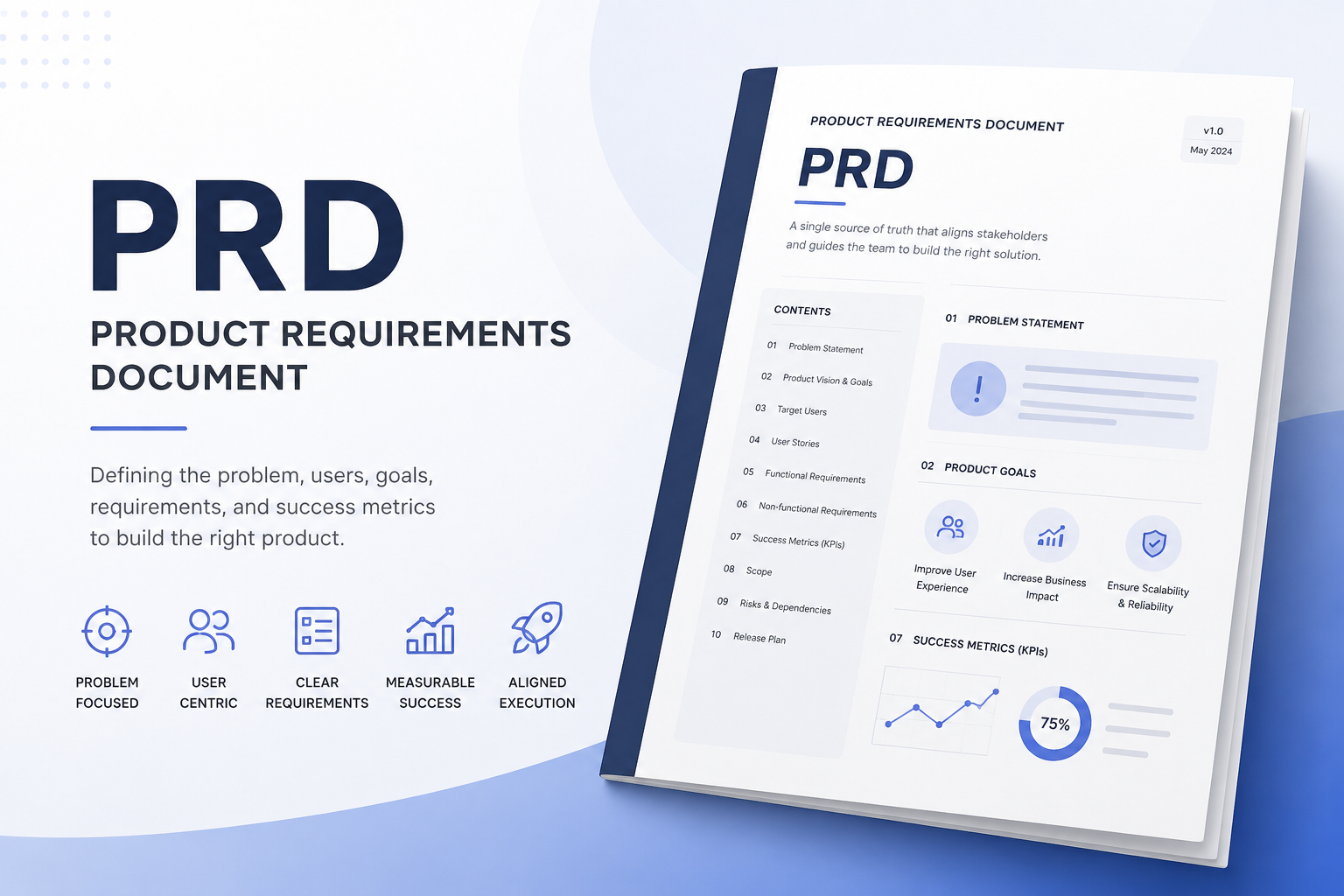
PRD
PRD
Product Requirements Document (PRD) A Product Requirements Document (PRD) is a strategic document that defines what a product should achieve, why it matters, and how success will be measured. It serves as the single source of truth for product managers, designers, engineers, QA, and stakeholders throughout the product development lifecycle. A well-written PRD aligns everyone on the product vision by clearly outlining the problem statement, business objectives, user needs, functional requirements, success metrics, constraints, and delivery scope. Rather than focusing on technical implementation, it emphasizes the desired user outcomes and product behavior, enabling cross-functional teams to build the right solution efficiently. A typical PRD includes: * Problem Statement * Product Vision & Goals * Business Objectives * Target Users & Personas * User Stories & Use Cases * Functional Requirements * Non-functional Requirements * User Flows * Success Metrics (KPIs) * Assumptions, Risks & Dependencies * Scope (In Scope / Out of Scope) * Release Plan & Milestones A PRD acts as the bridge between business strategy and product execution, ensuring that every team member shares a common understanding of what is being built and why.